
Haris Shah (CC’29) on Representing Pakistan, Growing Connections, and Learning the Ins and Outs of NYC
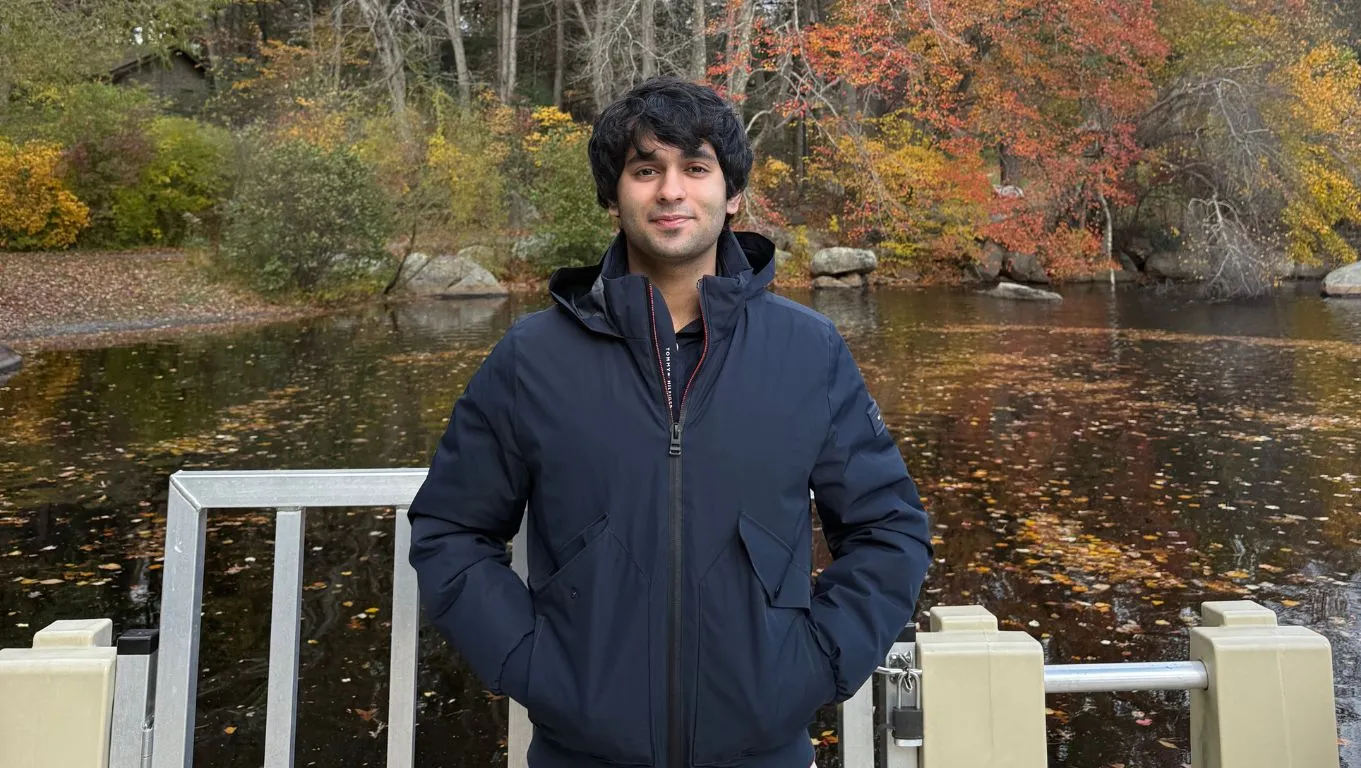
It’s 5:22 a.m. He picks up his phone and sees a message: “Can you confirm the rejection?” He stares at the screen, trying to make sense of what he’s reading on this dark, quiet morning. He immediately opens his email, searching for the notification from Columbia.
“My counselor didn’t have faith in me. Half an hour after the decision was released, he started calling me. I opened [my email] up, and then there’s this song which starts playing, and I was confused because this was the first time I was opening a U.S. application decision,” Shah said. “I wasn’t sure how to reach the official decision letter, and then I read ‘congratulations.’ I was so shocked.”
Haris Shah (CC’29) arrived on campus on August 23, ready for international student check-in. As a student from Pakistan, Shah grew up in a rural area, and studied at a school nearly 200 kilometers away from his home.
"I chose Columbia because it’s New York City. I felt like I could meet a lot of new people, and that NYC was somewhere I could be free."
“I chose Columbia because it’s New York City. I felt like I could meet a lot of new people, and that NYC was somewhere I could be free,” Shah said. “There is a vibe to New York, where everyone is trying to build their life, or they’re focused on something. It’s been chaotic because obviously it’s a big cultural shift.”
As a first-generation and first-year college student at Columbia College, Shah is eager to explore as many classes and groups as possible. Right now, he’s considering majoring in financial economics with a concentration in philosophy or political science. Shah has also wasted no time in joining student organizations on campus, like the Columbia Democrats, the Columbia Policy Institute, and Columbia’s Debating Union.
Navigating both New York City and Columbia has been a culture shock, in that coursework needs, communication, and resources often take place online. Determined to learn, Shah is embracing the adjustments with curiosity.
“Where my parents are from, they didn’t have seats in their class, they had to sit on the ground and try to learn from a teacher who was not an expert. They would sit down under a tree and start studying. It’s such an honor being a part of this wonderful community here. Coming here as a first-gen [student], a lot of things are new to me," Shah said. "Back home, we weren’t using laptops that much. Here, everything’s online — we have Canvas, we need to check our emails. I had to ask for help from my roommate. These small problems did come up, but the professors were really accommodating.”
One of Shah’s favorite classes at the moment is Literature Humanities or, as many know it, “Lit Hum.” From reading texts like Homer’s Odyssey to the Gospels of John and Luke, Shah has enjoyed finding connections between today and the ancient world, an experience that contrasts with his previous educational environment in Pakistan.
"I just feel that there’s more flexibility in the education system. Here, you can speak whatever comes to your mind. So, I read Genesis and I found similarities between Islam and Christianity, and how they connect. I feel like Lit Hum is a place I really enjoy because our professor keeps the class engaging."
“We’re not allowed to ask open-ended questions because you can get stuck with blasphemy cases,” Shah said. “I just feel that there’s more flexibility in the education system. Here, you can speak whatever comes to your mind. So, I read Genesis and I found similarities between Islam and Christianity, and how they connect. I feel like Lit Hum is a place I really enjoy because our professor keeps the class engaging.”
One hurdle Shah has faced is navigating the language barrier. Even though he has a background in British English, he’s had to work harder in classes like Calculus and Arabic to ensure he fully understands the material.
“The second most engaging class for me is Arabic. Most of my classmates are either juniors or seniors. I’m the only freshman in the class. Back home, I speak four to five languages, the languages of different provinces of Pakistan. Pashto, Punjabi, and then we have Urdu, which is the national language of Pakistan,” Shah said. “My high school was a British international school, so we had to adjust to English. I’m trying to learn it through the process of everything, for example, when I do my Lit Hum readings, it takes me comparatively a bit more time than the average American reader. I dedicate a lot of time to reading so I’m able to contribute in the class discussions.”
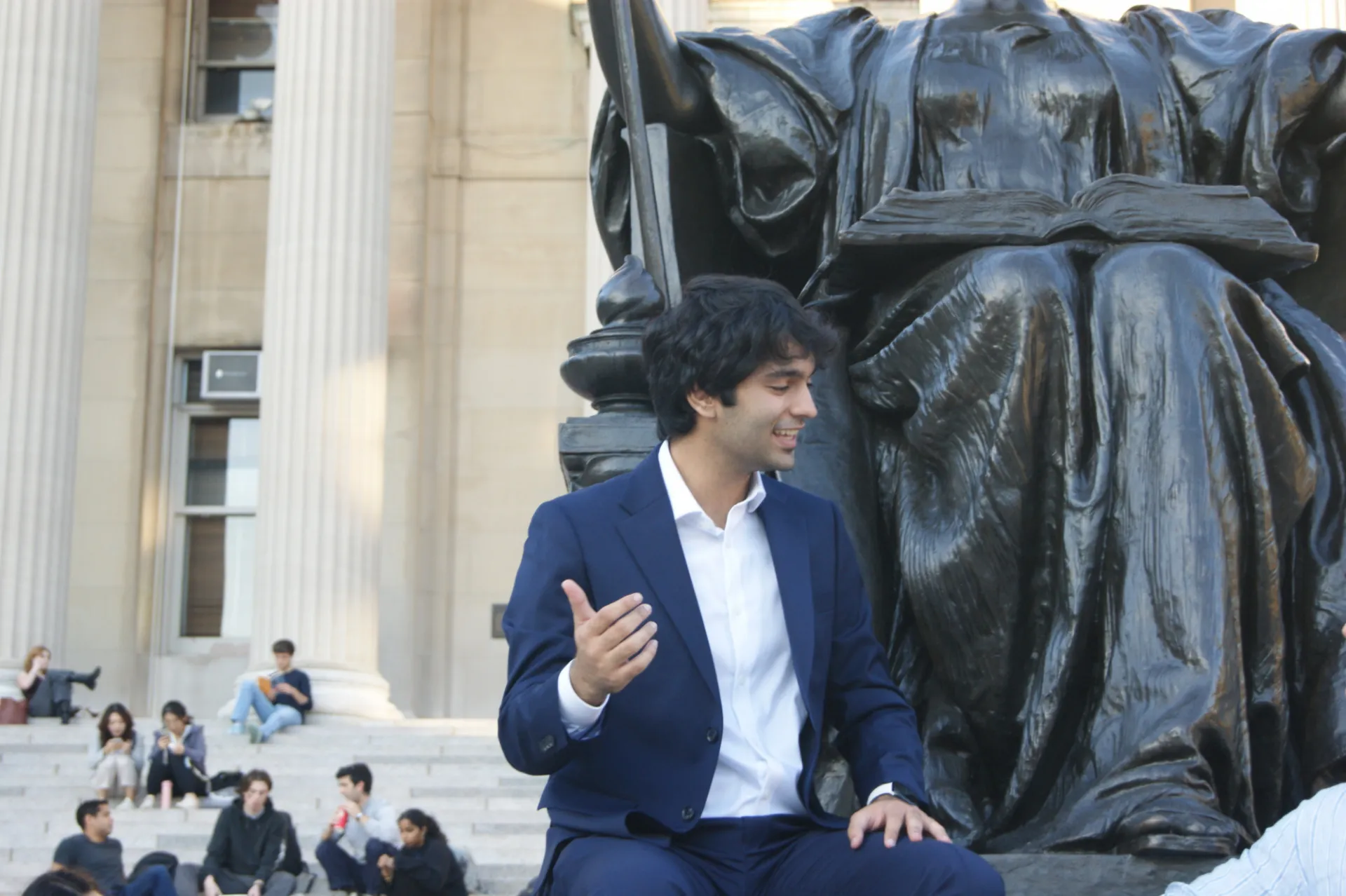
Between settling into classes and joining student organizations, Shah has also experienced a few distinct “American” parties. He’s learned quickly about the dancing, and the general chaos that comes with them. As much as he loved this introduction to New York City, there are a few moments when he simply needs time alone.
“One spot I really like in New York is Staten Island. I like the ferry ride," Shah said. "In order to find my peace and to spend some time alone, I just go to Staten Island, and you can sit there and think about life with a good view of the financial district.”
In Pakistan, Shah’s family is recognized for their generational contributions to their faith by their local community. Stepping into the streets of New York, Shah has a chance to contribute to his family’s legacy differently.
“Back in Pakistan, my family is a caretaker of a shrine. My grandfather was a great Sufi. Because of my grandfather’s contributions to Sufi Islam, people recognize me in the streets, through my grandfather, and they kiss my hands and touch my knees,” Shah said. “Sometimes, I feel like I’m a prince back home. Obviously I don’t feel like I deserve it because that’s something which he did, and he must be honored for it, not me.”
"Back home, there’s a lot of respect and love — unspoken love. I don’t remember the last time I said ‘I love you’ to my father, and I don’t remember the last time he told me that. But we know that love exists. It’s just the way it is. It exists in actions, it goes beyond words, and the things he’s done for me, or the things I do for him, they have in themselves their own value."
Without a doubt, Shah’s respect and love for his family stretches across oceans. Even now, as he and his family Skype weekly, he feels this affection extends beyond language itself.
“Back home, there’s a lot of respect and love — unspoken love. I don’t remember the last time I said ‘I love you’ to my father, and I don’t remember the last time he told me that. But we know that love exists. It’s just the way it is. It exists in actions, it goes beyond words, and the things he’s done for me, or the things I do for him, they have in themselves their own value,” Shah said. “I’m the first kid from my family or from my city to leave for another country. I remember when I was at the airport and I saw my father in tears for the first time ever. I’m here because of him, because he supported me.”
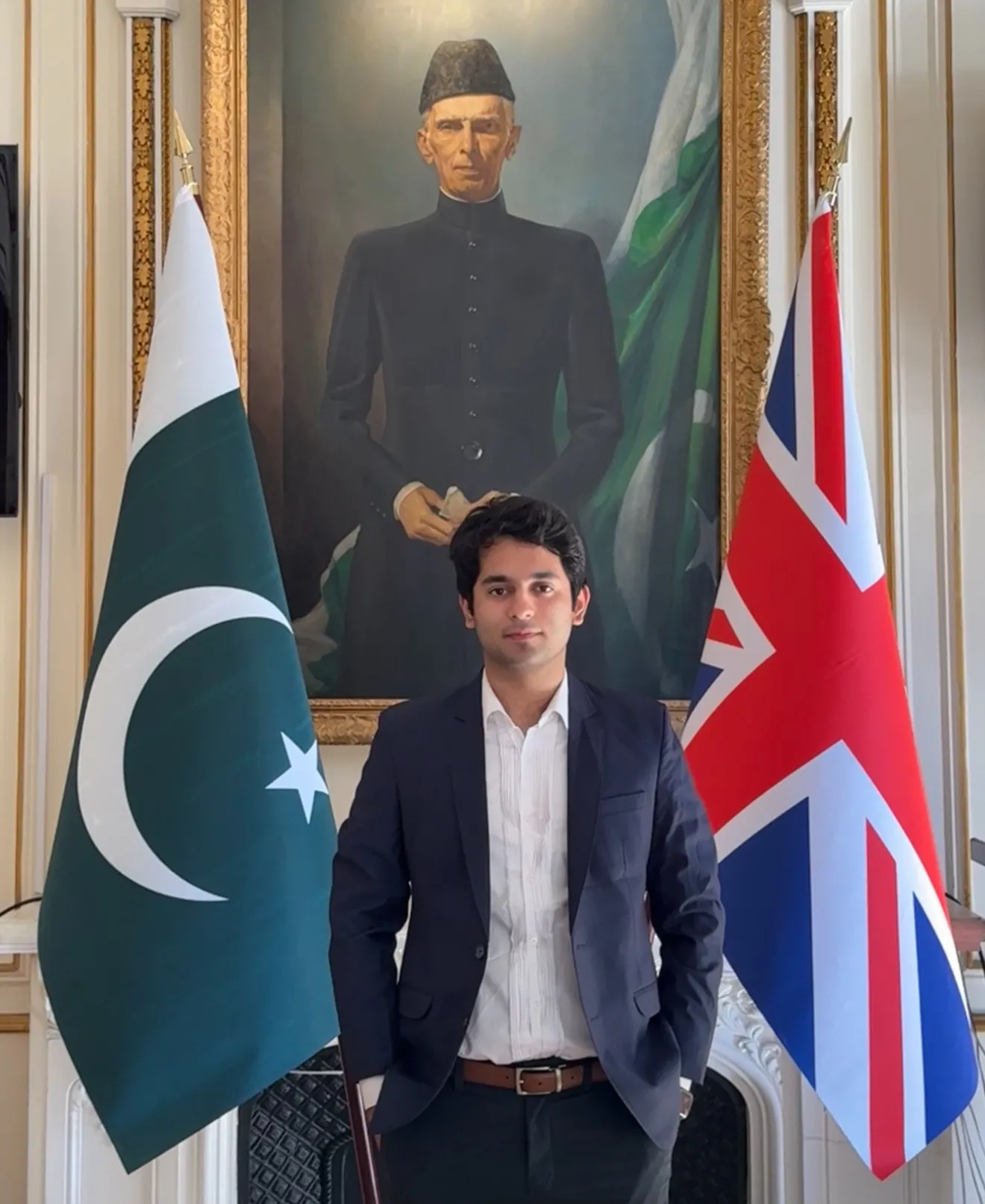
While he has found community with other American-Pakistani and Pakistani students, he feels a distinct weight to do something noteworthy for his community back home.
"Columbia has produced great leaders, and they’ve gone on to contribute to their nations. I just hope that Columbia produces one in the form of me, for Pakistan."
“Representing 250 million people over here – it’s a privilege. I feel like it’s an honor and this is what keeps me motivated and driven to not waste my time, to do productive things for my nation, for my people,” Shah said. “Columbia has produced great leaders, and they’ve gone on to contribute to their nations. I just hope that Columbia produces one in the form of me, for Pakistan.”
Shah encourages other international students to lead with their whole selves, trusting that genuine connections will grow out of that authenticity.
“If there was one piece of advice I could give to someone who’s in the same position as me, it would be to go for it. You need to live these experiences," Shah said. "You need to be who you are and present yourself as you are, and you do not need to change yourself for another society or for another community. I’ve noticed that since I’ve been here, I found my people, people who like me because of who I am."