
Come to Life: Joel Teron (GS’27) on Marathon Running, Giving Back, and Family
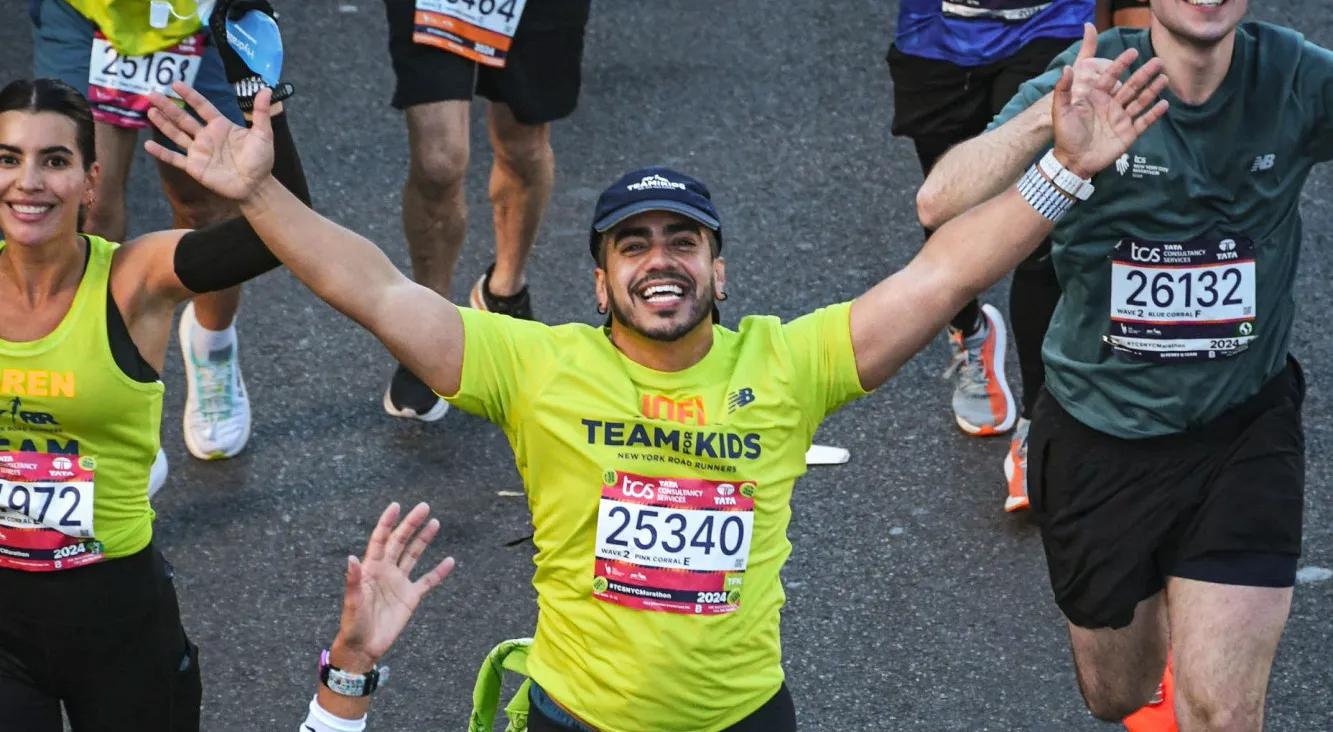
It’s estimated that less than 1% of people in the world have ever run a marathon — much less three marathons in the span of three months. But that’s exactly what Joel Teron GS’27 did this past fall.
A student at the School of General Studies, Teron recently declared his major in sociology with a concentration in public health. In the past year, he’s completed the Chicago, Berlin, New York City, and Tokyo marathons. Inspired by videos of runners at the 2022 NYC Marathon, he began running occasionally, eventually joining an open run organized by New York Road Runners (NYRR), where he was encouraged to sign up for the United Airlines New York City Half Marathon. From there, Teron says he “caught the bug” and is now one step closer to completing his goal of running the six World Marathon Majors.
“It’s an ongoing joke with my friends who say, ‘Which one will you complete first, all the World Majors or your graduate degree?’ It might be the World Majors at this point because now there’s only three left,” Teron said.
Shortly after receiving a significant medical diagnosis, Teron attended a friend’s commencement at Borough of Manhattan Community College (BMCC) and thought to himself, “Wait a minute, I could do this.” Later, he earned his associates degree in public health at BMCC while working full time and began working at a nonprofit focused on recovery and harm reduction.
“I was diagnosed with a heart condition back in 2021 that is heavily related to my history with substance use,” Teron said. “The fact that I’m able to reclaim my health through running is such a beautiful thing. It also allows me to connect with my city, and running also brought me all over the world to places like Berlin.”
“I was diagnosed with a heart condition back in 2021 that is heavily related to my history with substance use,” Teron said. “The fact that I’m able to reclaim my health through running is such a beautiful thing. It also allows me to connect with my city, and running also brought me all over the world to places like Berlin.”
Teron has maintained his recovery for over five years and began his work in the recovery field as a Certified Recovery Peer Advocate (CPRA). He currently serves as an Assistant Director for the Keith Haring Harlem Center, part of the Alliance for Positive Change, a nonprofit organization that helps people with substance use, mental health, and chronic illnesses such as HIV. In this role, he prioritizes leading with empathy and care, encouraging those who are interested in seeking treatment.
“I have had family members, including my older brother, who died of a drug-related accident and never got the help they needed. There were probably people out there trying to help them, but for whatever reason, they just weren’t ready at that time. I like to think I can be that person,” Teron said. “So when people are ready, they understand, ‘Okay, I can go to Joel if I actually want to do something different.’”
Joel is proud of those in recovery who serve as peer support liaisons. He also wants to show others that the possibilities for people in recovery are limitless.
“We offer more than just a lived experience,” Teron said. “We can become successful beings and also be afforded a seat at the head of the table.”
“We offer more than just a lived experience,” Teron said. “We can become successful beings and also be afforded a seat at the head of the table.”
Once denied a promotion because there were other qualified candidates with graduate degrees, Teron noticed that many of his colleagues had a Master’s in Public Health (MPH) from Columbia and made the decision to further his education. Now, he’s fallen in love with school and is floating the idea of pursuing a PhD or a career in education.
“That’s why I love GS and the opportunities that I’ve gotten through CUNY and now at Columbia. There is no one mold for a student, and I think that gets lost when you’re 18,” Teron said. “When I was 18, I felt like I had to do what was being told to me and follow an exact regimen. When I started to realize I was falling short, instead of asking for help, I ran.”
Another opportunity that has opened up is in how he understands his identity and its representation. By reflecting on those who attended Columbia before him, he now sees himself as part of a larger institutional history, one that has become part of his own identity.
“I’m a proud, out gay man,” Teron said. “So, it’s also about representation for LGBT students and LGBT people in general. The impact that I make, whether it’s in class, school, or work, goes beyond me. It’s to pave the way for people to come behind me.”
Teron says he now understands the importance and weight of being a leader in his communities, being viewed as a role model, and what that means for himself and his family.
“Growing up, that was one of the hardest things to understand: the value and importance of education when there weren’t a lot of people in my family that were educated,” Teron said. “Now that a few of us have gone back to school and are getting our degrees, we’re building a new narrative.”
“Growing up, that was one of the hardest things to understand: the value and importance of education when there weren’t a lot of people in my family that were educated,” Teron said. “Now that a few of us have gone back to school and are getting our degrees, we’re building a new narrative.”
This new narrative includes helping others with their school applications and providing advice to those who are inspired by his journey.
“We want to see someone that either looks like us or resembles something close to us,” Teron said. “For us to feel: ‘if they did, then I can do it.’ I search for that in many aspects of my life, but it wasn’t until these past five years that I really started to understand that.”
Between his job, classes, and social life, his love for running is what keeps him going, both mentally and physically.
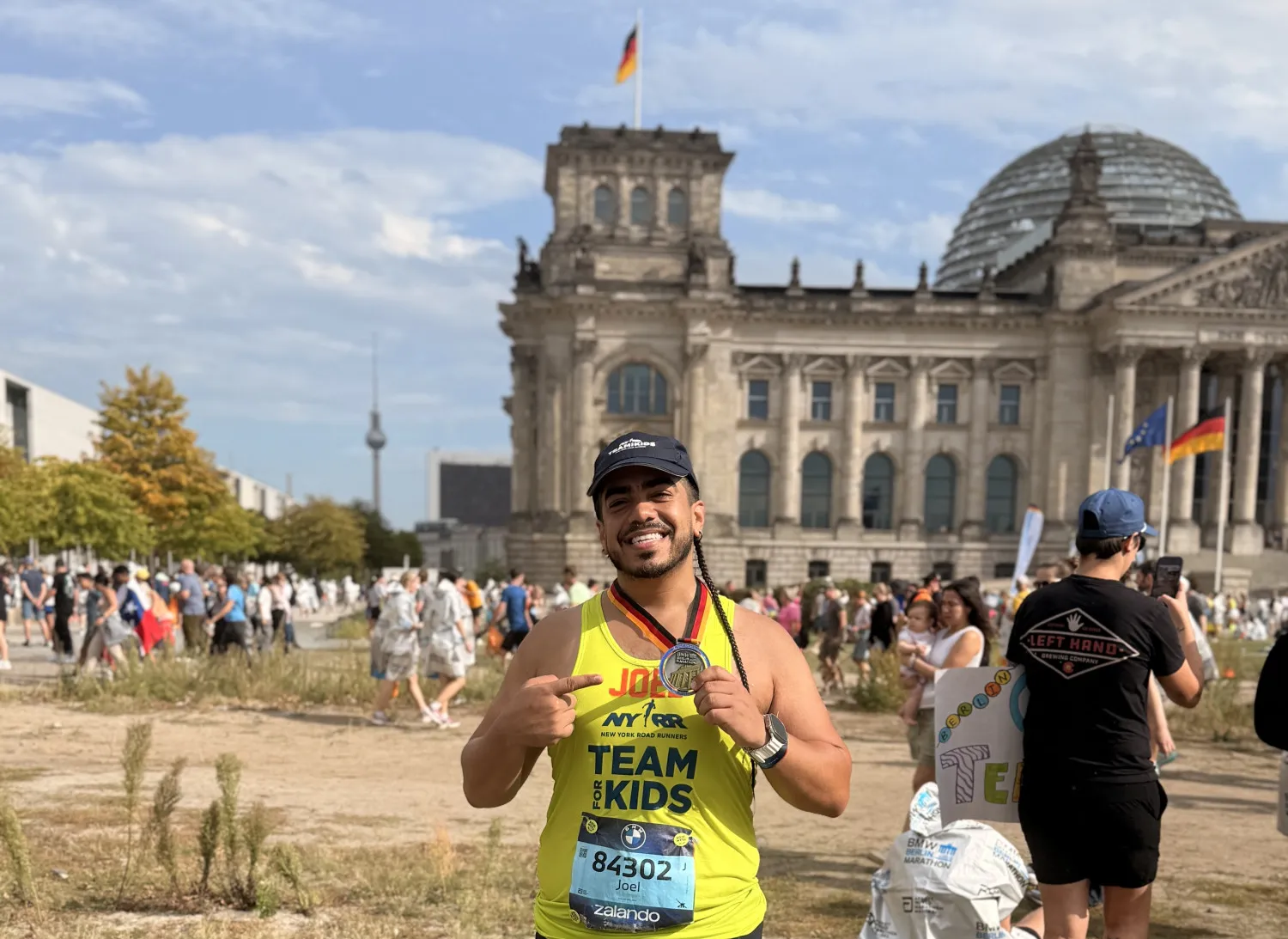
“At work, I’m committed to the participants we serve,” Teron said. “For support networks, I’m that friend who’s always there for people. But running is my one selfish moment. I get to do what I enjoy doing.”
While running may be Teron’s “selfish” outlet, he also gives back through his training by running with a charity called Team for Kids, which raises funds for the New York Road Runners (NYRR) youth programs.
“I want to represent that connection within our family that we can have these conversations about education, success, employment — things that I was never afforded,” Teron said. “My family did the best they could and that’s why my family ended up moving from Puerto Rico to here. For more opportunities, more things for us to be able to utilize. I like to think that vision has come to life.”